FAQ
คำแปลภาษาไทย
1. บทนำ:
VDA ได้เผยแพร่ฉบับปรับปรุง (เล่มปกเหลือง) ของเล่มที่ 2 – การประกันการผลิตและกระบวนการ
เล่มปกเหลืองยังไม่ใช่ฉบับสุดท้าย และเปิดโอกาสให้ทั้งห่วงโซ่อุปทานทั้งหมด – กล่าวคือ ทุกบริษัทที่ใช้เล่มนี้ – สามารถยื่นข้อโต้แย้งได้
ข้อโต้แย้งอาจเกี่ยวข้องกับประเด็นต่าง ๆ เช่น ภาระงาน ความเข้าใจได้ง่าย การใช้ถ้อยคำ เป็นต้น ทั้งนี้ ข้อโต้แย้งจะต้องมีเหตุผลรองรับและมีความเหมาะสม
จากนั้นข้อโต้แย้งจะถูกพิจารณาโดยคณะทำงานโครงการ ซึ่งจะพิจารณารับหรือปฏิเสธ และแจ้งผลกลับไปยังผู้ยื่นข้อโต้แย้ง
ลิงก์สำหรับดาวน์โหลดเล่มเอกสารและแบบฟอร์มข้อเสนอแนะ มีดังนี้:
https://vda-qmc.de/publikationen-und-apps/gelbbaende/
2. สรุป:
VDA เล่มที่ 2 อธิบายกระบวนการอนุมัติกระบวนการผลิตและผลิตภัณฑ์ (PPF) ซึ่งเป็นเครื่องมือสำคัญในการประกันคุณภาพของผลิตภัณฑ์และกระบวนการผลิตในห่วงโซ่อุปทานอุตสาหกรรมยานยนต์ จุดมุ่งหมายของกระบวนการ PPF คือการจัดเตรียมหลักฐานที่สามารถตรวจสอบได้ว่า ข้อกำหนดทั้งหมดที่ตกลงกันระหว่างองค์กรและลูกค้าได้รับการปฏิบัติตาม และสามารถรับประกันการส่งมอบในการผลิตจริง (Mass Production) ได้อย่างราบรื่น
กระบวนการ PPF ประกอบด้วยองค์ประกอบหลัก 2 ส่วนที่เทียบเท่ากัน ได้แก่ การอนุมัติกระบวนการผลิต และการอนุมัติผลิตภัณฑ์
องค์กรมีความรับผิดชอบในการดำเนินการกระบวนการ PPF ทั้งในส่วนของกระบวนการผลิตของตนเอง รวมถึงกระบวนการที่จ้างภายนอก และชิ้นส่วนที่จัดซื้อจากห่วงโซ่อุปทาน ทั้งนี้ ผลลัพธ์จากกระบวนการ PPF ของซัพพลายเออร์ลำดับก่อนหน้า (เช่น Tier n หรือ PPAP) สามารถนำมาบูรณาการรวมได้
หลักการสำคัญของฉบับที่ 7 คือแนวทางการพิจารณาตามความเสี่ยง (Risk-based approach) โดยขอบเขต ความลึก และประเภทของหลักฐาน จะพิจารณาตามระดับความเสี่ยงของผลิตภัณฑ์หรือการเปลี่ยนแปลงนั้น ๆ และไม่ได้กำหนดตายตัวอีกต่อไป แนวทางนี้ช่วยลดความซับซ้อนและภาระงานด้านเอกสาร ขณะเดียวกันยังคงรักษาคุณภาพและความสามารถในการตรวจสอบย้อนกลับได้
3. เหตุใดจึงต้องมีฉบับใหม่?
-
ความซับซ้อนของผลิตภัณฑ์และห่วงโซ่อุปทานที่เพิ่มขึ้น
-
มุ่งเน้นการพิจารณาตามความเสี่ยง แทนการเน้นปริมาณเอกสาร
-
การปรับให้สอดคล้องกับ IATF 16949 ข้อกำหนดของ OEM และกระบวนการสากล (เช่น PPAP)
-
เพิ่มความชัดเจน ความผูกพันตามข้อกำหนด และประสิทธิภาพในกระบวนการ PPF
4. การเปลี่ยนแปลงที่สำคัญ
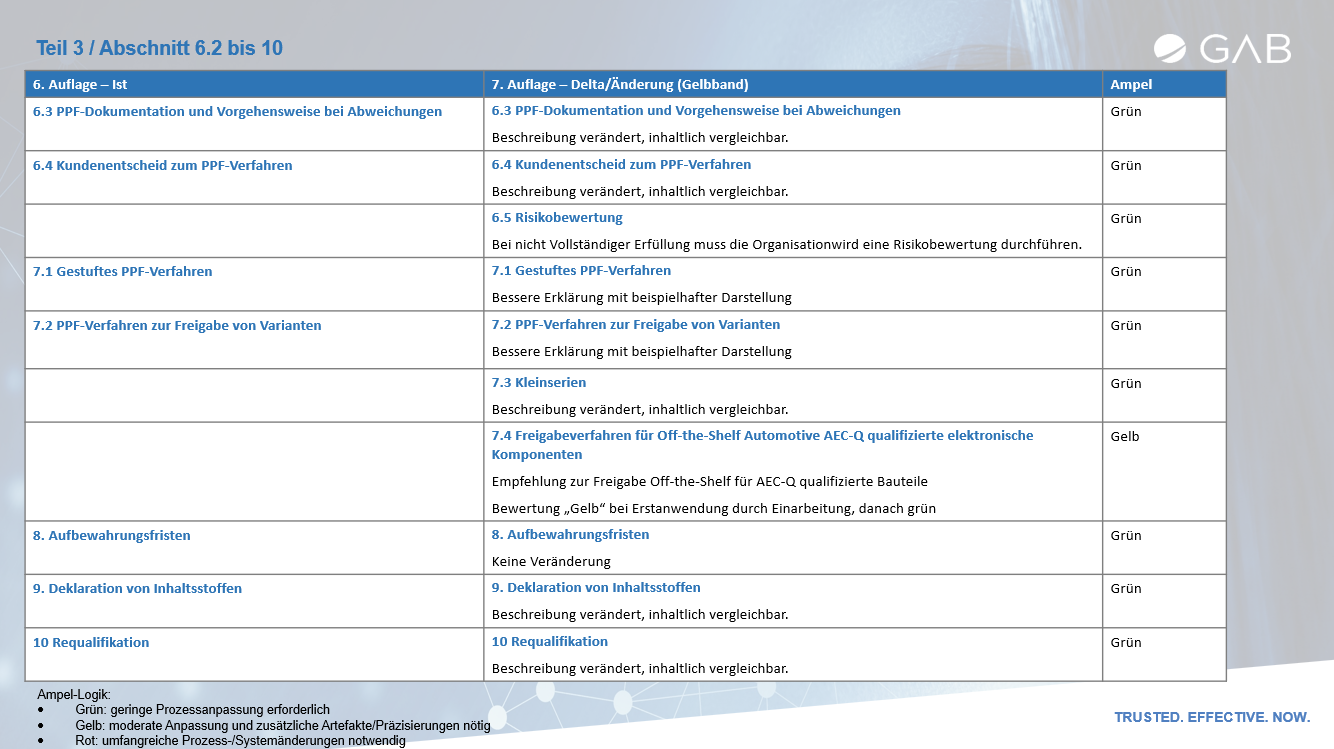
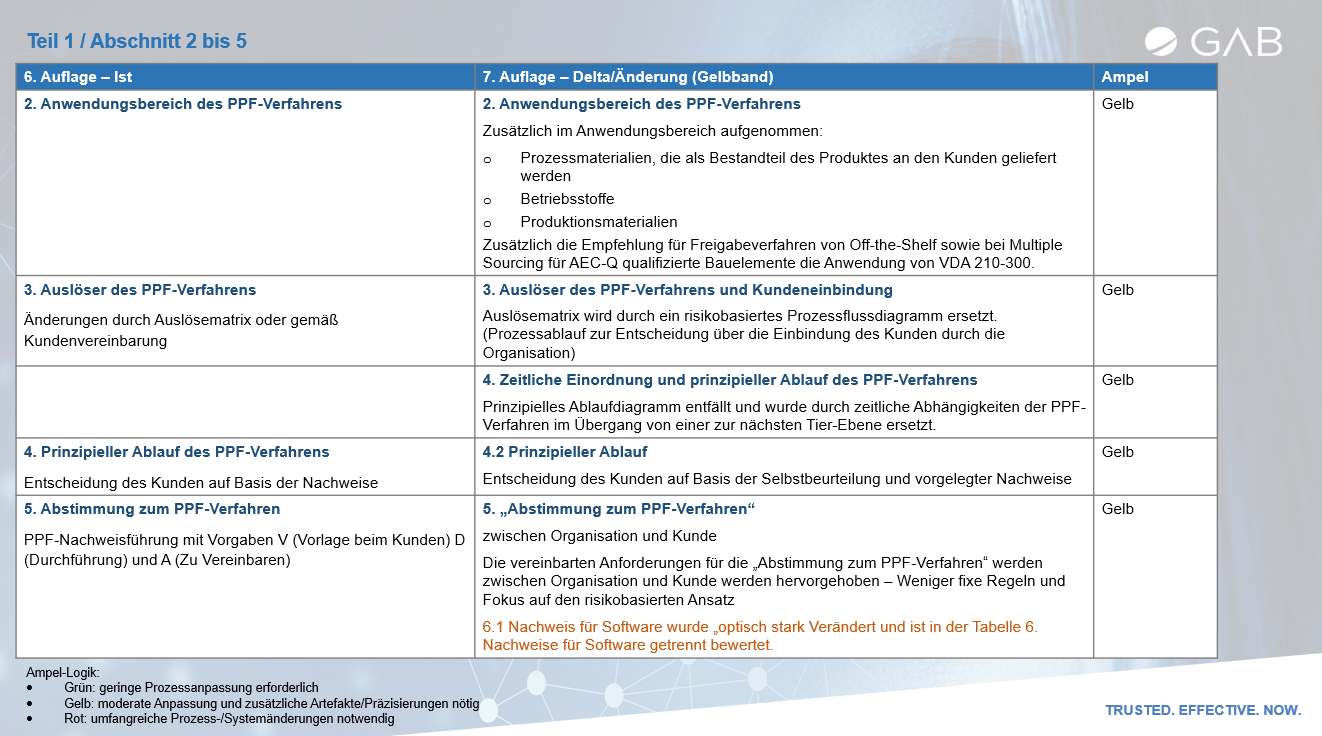
4.1 การเน้นแนวทางตามความเสี่ยงที่ชัดเจนยิ่งขึ้น
สิ่งใหม่/ปรับปรุง:
-
ขอบเขตและระดับความลึกของ PPF อ้างอิงตามความเสี่ยงของผลิตภัณฑ์และการเปลี่ยนแปลงอย่างสม่ำเสมอ
-
ยกเลิกแนวคิด “ใช้รูปแบบเดียวกันกับทุกกรณี (one-size-fits-all)” ในด้านเอกสาร
-
มุ่งเน้นที่ประสิทธิผล (effectiveness) มากกว่าความครบถ้วนของเอกสาร
คุณค่าเพิ่มสำหรับผู้บริหาร:
✔ ลดงานเอกสารที่ไม่จำเป็น และใช้ทรัพยากรได้อย่างตรงจุดมากขึ้น
4.2 การกำหนดให้มี “การประสานงานเกี่ยวกับกระบวนการ PPF” อย่างเป็นทางการ
สิ่งใหม่:
-
กำหนดให้มีการประสานงานล่วงหน้าระหว่างองค์กรกับลูกค้า (พร้อมช่วงเวลาที่แนะนำ)
-
กำหนดรายละเอียดเกี่ยวกับ:
-
ขอบเขตและหลักฐานของ PPF
-
บทบาทและความรับผิดชอบ
-
กำหนดการ การยกระดับประเด็น (Escalation) และการทวนสอบ/อนุมัติซ้ำ (Requalification)
-
คุณค่าเพิ่มสำหรับผู้บริหาร:
✔ ความคาดหวังชัดเจนขึ้น ลดการยกระดับปัญหา และลดคำร้องขอเพิ่มเติม
4.3 การแยกบทบาทอย่างชัดเจนและให้ความสำคัญเท่าเทียมกัน
กำหนดชัดเจนว่า:
-
การอนุมัติกระบวนการผลิต และการอนุมัติผลิตภัณฑ์ เป็นองค์ประกอบที่มีความสำคัญเท่าเทียมกัน
-
ทั้งสองส่วนเป็นข้อบังคับสำหรับการอนุมัติการผลิตจริง (Series Approval)
คุณค่าเพิ่มสำหรับผู้บริหาร:
✔ เพิ่มความโปร่งใสเกี่ยวกับความพร้อมของกระบวนการ เทียบกับความพร้อมของผลิตภัณฑ์
คำแปลภาษาไทย
4.4 โครงสร้างใหม่ของประเภทการทวนสอบ (Verification Types)
สิ่งที่กำหนด/ปรับให้เป็นมาตรฐานใหม่:
กำหนดประเภทของหลักฐานมาตรฐาน 4 ประเภท ซึ่งสามารถเลือกใช้และผสมผสานได้อย่างยืดหยุ่นตามระดับความเสี่ยง:
-
การประเมินตนเอง (Self-assessment)
-
การทวนสอบอ้างอิง (Reference verification)
-
หลักฐานการมีอยู่จริง (Proof of existence)
-
หลักฐานการทวนสอบ (Verification evidence)
คุณค่าเพิ่มสำหรับผู้บริหาร:
✔ ใช้หลักเกณฑ์ที่เป็นมาตรฐานเดียวกัน และสามารถเปรียบเทียบได้ดียิ่งขึ้น
4.5 การเสริมความเข้มแข็งด้านการบริหารความเสี่ยงในกรณีเกิดข้อเบี่ยงเบน
ข้อกำหนดที่เข้มงวดขึ้นอย่างมีนัยสำคัญ:
-
บังคับให้มีการประเมินความเสี่ยงแบบสหสาขาวิชา (interdisciplinary) ในกรณีที่ไม่เป็นไปตามข้อกำหนด
-
มีข้อกำหนดด้านการจัดทำเอกสารและการให้เหตุผลประกอบการตัดสินใจ
-
ห้ามเริ่มการผลิตจริง (Series Start) หากยังมีความเสี่ยงที่ไม่สามารถยอมรับได้
คุณค่าเพิ่มสำหรับผู้บริหาร:
✔ เพิ่มความมั่นคงทางกฎหมาย และทำให้การตัดสินใจมีความน่าเชื่อถือยิ่งขึ้น
4.6 กฎเกณฑ์ที่ชัดเจนสำหรับกรณีพิเศษ
สิ่งใหม่/ขยายเพิ่มเติม:
-
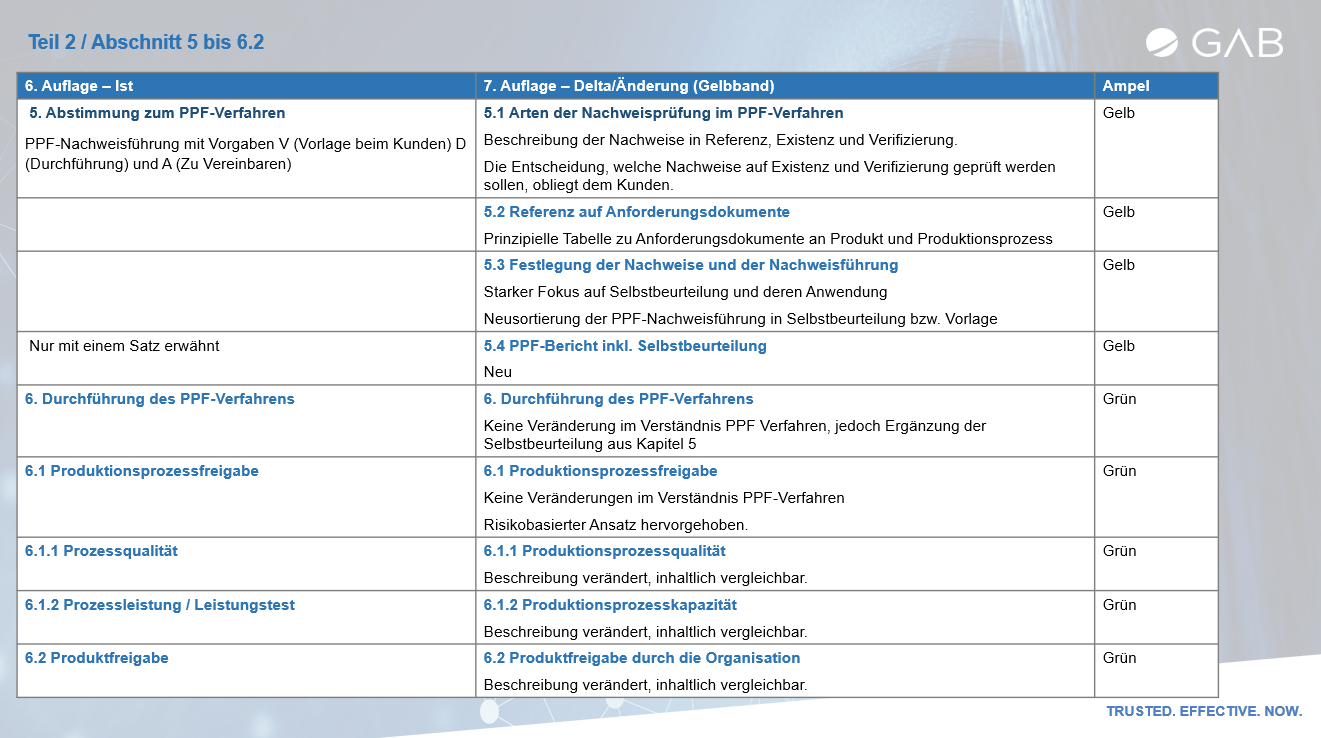
กระบวนการ PPF แบบเป็นขั้นตอน (Tiered PPF procedure)
-
การอนุมัติสำหรับรุ่นย่อย (Variant) และการผลิตจำนวนน้อย (Small series)
-
ข้อกำหนดเฉพาะสำหรับชิ้นส่วนอิเล็กทรอนิกส์มาตรฐานที่ผ่านการรับรอง AEC-Q
-
ข้อกำหนดที่มีผลผูกพันสำหรับการทวนสอบ/อนุมัติซ้ำ (Re-qualification)
คุณค่าเพิ่มสำหรับผู้บริหาร:
✔ มีแนวทางที่เป็นมาตรฐานเดียวกัน แม้ในกรณีพิเศษ
4.7 สิ่งนี้มีความหมายอย่างไรสำหรับผู้บริหาร?
-
มีความรับผิดชอบมากขึ้นในการตัดสินใจบนพื้นฐานของความเสี่ยง
-
เข้ามามีส่วนร่วมตั้งแต่ระยะแรกในประเด็น PPF ที่สำคัญ
-
ลดเอกสารเชิงรูปแบบ แต่เพิ่มอำนาจในการตัดสินใจ
-
PPF ถูกกำหนดบทบาทอย่างชัดเจนให้เป็นเครื่องมือด้านการบริหารและการควบคุม
ฉบับที่ 7 ของ VDA เล่มที่ 2 ได้ปรับเปลี่ยนจุดเน้นจากการจัดทำเอกสาร ไปสู่การบริหารความเสี่ยง การตัดสินใจ และประสิทธิผล ซึ่งช่วยเสริมสร้างคุณภาพ ความสามารถในการส่งมอบ และความมั่นคงทางกฎหมาย
หมายเหตุ: เนื่องจากมีการเปลี่ยนแปลงที่สำคัญในส่วนคำอธิบายด้านซอฟต์แวร์ เราจึงได้นำเสนอรายละเอียดในบทความข่าวแยกต่างหาก
สามารถดูข้อมูลเพิ่มเติมได้ในโพสต์ของเราบน LinkedIn
GAB-Global LinkedIn